Watching ‘Graphic Means’ Nearly a Decade Later & Wondering if the Design Industry Has ‘Strayed Too Far from the Plot’
Reflecting on Graphic Means: What Digital Design Has Lost
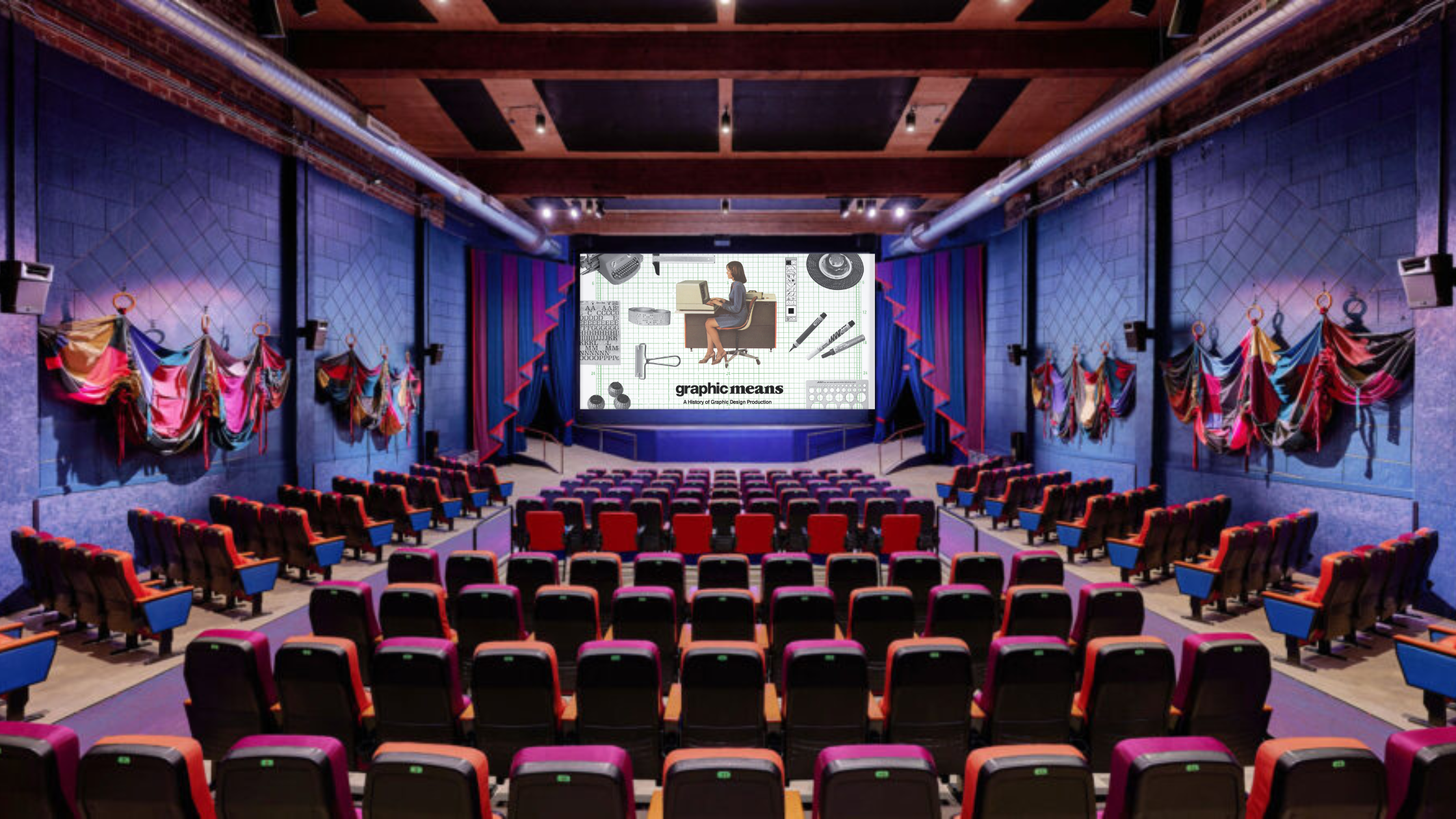
(THIS ARTICLE WAS WRITTEN AFTER ATTENDING THE APRIL 9th SHOWING OF ‘GRAPHIC MEANS’ AT PAM CUT’S TOMORROW THEATER)
You've probably heard someone say, 'I was born in the wrong generation.' It's a phrase that often gets dismissed—and for good reason. We're all aware that each passing generation tends to live with more convenience than the last. That’s not to say that no one faces obstacles or personal grievances; I’m only saying that despite the generational traumas that are passed down through the generations, humanity continues to add ease to every necessary process: hunting and gathering has evolved into online grocery shopping with same-day delivery. Traveling by horseback has evolved into ordering a driverless cab using an app. You see what I mean?
Oftentimes, the person exclaiming, “I wish I was born in the ‘60’s!” fails to reminisce upon the previous levels of sexism, racism, and technologically inconvenient ways of life that were the norm back then–at least I’d hope so. However, watching Briar Levitt's Graphic Means: A History of Graphic Design Production as a mid-level creative searching for work (and in technologically uncertain times, no less) made me finally want to yell that phrase from a mountaintop. Even still, while I can admit to feelings of FOMO for a time in which I didn't even exist, I fully acknowledge that I am still grateful for how easy we have it nowadays.
Easy. What an interesting word. 'Easy' is something we constantly crave in life despite knowing 'easy' leaves us unfulfilled. Doing the easy thing in life often gives us the reward of checking a quick, painless chore-like task off our to-do lists just to save a few minutes, yet we know an easy process often produces lackluster results. You know how parents and grandparents were always nagging, "Not all things worth doing in life are easy!" and "Don't take the easy way out!" Well, I'll be the first to admit that they were right, and there's a reason they said it. I hate to say it, but it's quite 'easy' to be a designer or artist in today's digital age.
Notice, I didn't say it's easy to be a good designer or artist in the digital age. "Good" meaning objectively good: well-renowned, consistent, and generally successful. No, because being a talented creative individual that stands out is undoubtedly the most difficult and stressful part of creative industries today. Technology is advancing, creative processes are changing, companies are downsizing…an industry that has always been considered as competitive can sometimes seem like it’s beginning to border on exclusive as the job positions we once dreamed of are slowly waning away on the market (whether the positions are eliminated or filled).
When Graphic Means first showed us the reality of The New York Times' previous industrial rooms used for hot metal typesetting, my mind was absolutely blown. Even as technology progressed into cold type and paste-ups, the truth is that there were many, many creative jobs available in the industry. Because there simply had to be! Printing at a large scale couldn't possibly be done any other way.
That said, with each progressing step of technology within design, it seems we make one big step for man, but one giant leap backwards for mankind, at least in terms of workforce. Now that the multiple floors of designers, typesetters, and studio space have been condensed into one little laptop, there is no need to employ hundreds of people. In some cases–such as a small company or a contracted, freelance gig–it’s expected that just one human being can handle it all.
Entire departments being compacted down into one computer is a heartbreaking concept. Financially, it makes sense, of course. If you buy a few new laptops and hire a small team, you should essentially already have everything you need, all the while saving millions of dollars in the long run. But where are all those available creative positions now? How does the economy shift from losing so many jobs due to quick technological advancements? Do all the designers need to be reallocated to software experts and engineers? Perhaps, and if I have to then I will, but if the decision’s up to me…no, thank you. Again, I can do it, but that’s not what I wanted to do with my life. And is it really so close-minded of me to desire the life I’ve sought after and worked for? I personally don’t think it’s a crime.
And of course, these issues are only being exacerbated with the progress of AI. Such advancements can often drain the creativity out of the actual act of creation (not always, but sometimes). If all creation can be formulated by some code or written prompts, then where's the human touch of freedom, emotion, and expression? Even if you, the human being, are describing something emotional within your prompt, the ‘AI creator’ is incapable of feeling while in the act of creating it. And not to mention, while it’s creating something completely devoid of emotion, that emotionless creation is purely based on millions of works for which it scoured every corner of the internet for. All that aside, the most heartbreaking part is that AI has pulled us away from the awe of handmade brilliance and the magic of in-person collaboration.
Now, as I complete my designs at home, alone, and on my laptop, I recognize the benefits of technological advancements: the absolute privilege of skipping a long commute, choosing when to get ready, and avoiding mandated hours in a fluorescent-lit commercial office space. Yet, as I sit quietly in my at-home office, I often find myself quietly wishing for something more. I've already become the designer I've always wanted to be. The designer I wasn't sure I could become when I was a scared little nineteen-year-old…which is a really cool feeling, and I’m grateful to have ever felt it. Even still, I hear a faint whisper telling me that something is missing. Funny enough, those whispers tend to go away when I'm painting and drawing, or when I'm working on a project with another person.
Many people in creative industries will joke, "I'm really an artist, but I'm a [insert whatever creative job here]." And after watching Graphic Means, I realized there was a time when being a graphic designer meant being a studio artist—the two were inseparable. No, I'm not saying that current designers aren't artists–I’m one of those designers who spends their free time making art. I'm only saying that the physical artistic practice has widely been removed from the process of design. When graphic design first came about, putting together an objectively good design with physical assets was truly a technical and challenging art form that had to be learned, practiced, and refined.
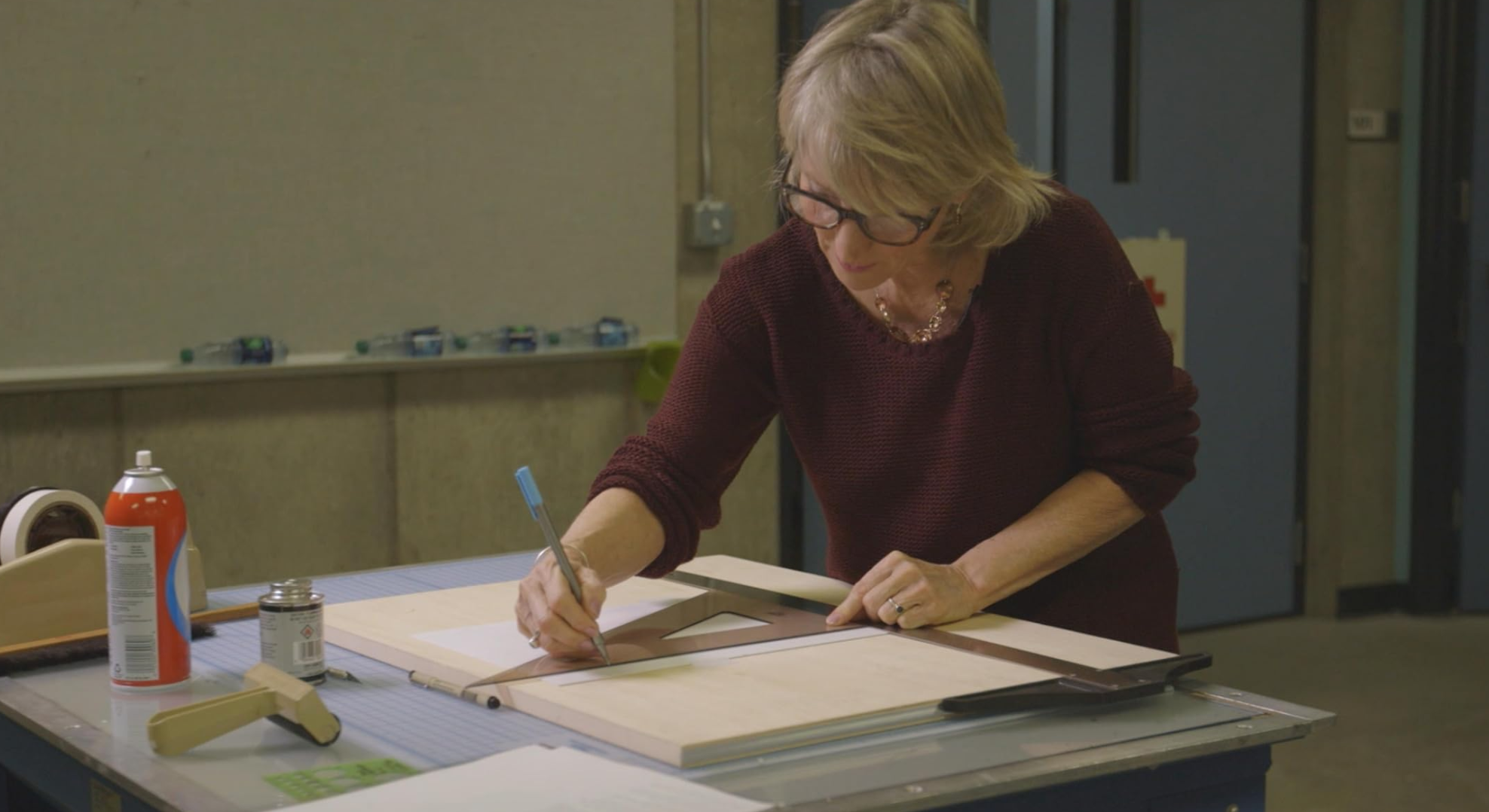
You can argue that design is still that way, and I'd agree because practice is necessary to develop any skillset. But I'd argue that the tactile precision required—the steady hand guiding an X-Acto knife, the careful alignment with protractor and ruler—offered a different kind of technical mastery that many of us now miss experiencing in our daily work. Of course, digital tools have opened design to people who might not have had access to it in the physical-studio era, and that democratization is genuinely valuable.
Many of today’s designers have yet to study the history of design and therefore don't even know what we're all missing out on. The motion of physical creation has been lost on all of us in the professional setting. And I guarantee there are designers out there who would read this article and disagree as hard as one could possibly disagree. But it’s my personal wish that I could be drawing, cutting, pasting on draft tables all day rather than melting my brain in front of a laptop. But hey, it’s no secret that thousands of designers thrive in this environment every day, and I fully understand why. There's genuine value in being able to execute projects more efficiently.
For example, only once have I been able to touch a page of Letraset type–I believe it was actually in Briar's typography class during my year at Portland State, right around the time that Graphic Means was to be released. So, special thanks to Briar for that memorable experience. I remember attempting to line up enough letters for a couple words, and I was complete garbage at it. I'm a talented artist no doubt, but that was a whole different skillset. If I had to learn it, I'd have to dedicate endless hours of practice to it. Letraset fascinated me and yet made me sad that I'll most likely never experience such processes in a professional setting again. That perspective hits a little harder as I am speaking upon being restricted by the creative shackles of my keyboard.
Now—and please read this as positively as possible—anyone can instantly use pre-designed templates or insert a couple prompts into an AI site when whipping up a flyer, poster, or social media post. I can be rational enough to say that I find it wonderful that anyone can become a designer and create a better life for themselves. Better yet, it's beautiful that anyone can simply sit down and bring their personal creative ideas to life. To take the time to learn a software requires a level of dedication and interest that not all people have, and that in and of itself is remarkable. Furthermore, not all artwork has to be made to be professionally and technically perfect–whatever happened to creation for the sake of creation? It would be nearsighted, ungrateful, and lacking perspective for me to say that 'technology has done absolutely nothing for us' as it has gifted us with such convenience, speed, and accessibility.
Such accessibility allows for so many people to experience more beautiful possibilities and opportunities in life, but on the other hand…if everyone can have a design career, then it also makes you wonder, “Can anyone?” The design industry has always been considered highly competitive, but it has now become so blatantly oversaturated that sometimes you still can’t align with a position even when you extend your skillsets into marketing, branding, and social media. It's a strange position to be in: those of us who studied design for years and invested heavily in formal education now find ourselves competing in a market where the barriers to entry have essentially disappeared. That shift simultaneously makes the design industry more accessible and more unstable.
This only begs the problem: not everyone who's hiring knows whether someone used a template or designed something from scratch, and I'm not sure if anyone even cares anymore, unless they're someone who took the time and money to go to school. That may come across as cynical or condescending, but I’m just saying that I’m fully aware student debt doesn’t automatically make me a better candidate. Not in the slightest. So then what? You just have to be the best despite all obstacles. No pressure!
Not only do I wonder about the impact of technology on the industry itself, but I also ponder the effects of technology on the designers themselves. I have had severe attention-deficit issues my whole life; I often wonder what my brain could've been like if I hadn't been raised in front of a TV, watching shows and playing video games in times of critical cognitive development. I'm not here to make baseless claims, but it's proven that higher levels of screen time increase the risk of concentration issues later on. And that's not a knock on anyone's parents–mine were raised the same way, the original television-watching test rats, and no one even knew the effects of this stuff until more recently.
But what if I could have exclusively been playing outside, doodling in my sketchbook, reading books as a child, rather than watching Weird Al Yankovic music videos and developing a parasocial relationship with SpongeBob? In that same vein, what if I could have studied design strictly by hand, in the studio with other people? While I'm grateful to be an educated woman, I feel robbed by the fact that our generation’s version of 'pulling an all-nighter' for my design classes meant buying a pack of Red Bull and staring at a screen until I forgot to blink. I can't help but wonder, what the hell did all of this screen time do to my brain and my personality? I'm doing fine, for the most part—but I'd be lying if I said I couldn't use more patience and focus in my life.
Yet, things didn't turn out that way for my age group. I remember being a young child, when I would log into Microsoft Word and type short stories until my little heart gave out. My dream was always to write a novel. Even then I knew–on a very simplified level–all I had to do was type, type, type, and then I could digitally send it to someone who has the almighty powers to get it published. Or, if it was just for fun, I could print out multiple copies at the blink of an eye, with our laser jet HP printer and hand it out to my friends. That is, if the damn printer was working. To us, CMYK meant nothing more than ink cartridges you could buy at Staples. My only insight into the history of typing was when my parents said, 'When I was your age, we had to write essays using typewriters, and we had to start over on a page if we made a mistake!'
That's the main reason why I loved printmaking in college: I knew virtually nothing about printing or its history beyond Gutenberg's invention of the printing press, so it was a whole new world. Graduating with a degree in Applied Visual Arts & Design, I was able to choose a specialization. My line of thinking was: I was skilled at painting, I was skilled at drawing, and I craved something new. So I chose printmaking, partly because it was new and exciting, and partly because I knew it was way too expensive for me to learn otherwise. My professor Yuji Hiratsuka taught us the ins and outs of monotype, lithography, copper etching, you name it. And I remember, as I spun the giant wheel on the press, I was thinking, "Wow, I'm literally a human printer." That thought process makes me laugh with what I now know. Up until the last few decades, any human being could see a modern-day laptop-printer-combo and exclaim, "Wow, an automated printmaking person!" If you date back to the age of the printing press, hell, some of them might even condemn it as witchcraft.
My college printmaking journey also brought me the beautiful experience of using Oregon State's printing press. While I hope it is now in a place where it can be admired and well-loved, at the time it was literally locked away in the basement room where the four walls were made of plywood. That didn't matter though. The boxes and stacks of type sets surrounding this giant, iron press seemed to make all of that insignificant. It was so much more fascinating than the cheap modern office printers that I had been accustomed to. And that was a time when I yet again came to realize that we've lost sight of a special process in the name of efficiency and profit. Even with all this wonderful experience with printmaking, I never really thought about what went into printing on a grand scale, such as newspapers or catalogs.
I guess what I mean to say is: I just yearn for things to be more simple. I yearn for a slower life where face-to-face collaboration and patience are valued. For example, when I’m choosing a font, I click on a drop-down and scroll through hundreds, maybe thousands of fonts. While I understand the different uses between serifs and sans-serifs and I've studied the typography of different eras, the choices are overwhelming. That feeling of overwhelm seems to be everywhere, causing designers to live a life of analysis paralysis. Is that font appropriate? Is the experience section of my resume too diverse? Is this design trying too hard to stand out, or is it not interesting enough?
It seems like hundreds of design decisions lie in the simplicity of one little click. And it’s times like these where I feel the pressure that I wish I could choose my colors and fonts from a very limited book. I fully understand those kinds of limitations within design work bring their own inconveniences and challenges, however, in a time when everything is–stressfully and chaotically–instant due to digital automation, I wish now more than ever that I could just slow down and really enjoy the process.
As much as I could continue to criticize the downside of digital design, I’ll admit that chuckling at the more negative interviews from early designers in Graphic Means made me realize it's easy to look down my nose at the way things are. It’s easy to complain about how bad things might be, but that's not how I want to live life. I want to adapt and experience new technologies. I want to welcome change rather than feel discouraged by it.
And there are certainly several interviews with early designers that are tastefully sprinkled throughout Levitt's documentary–and I’m talking designers who were around far before all this tech stuff. While some of their insights and anecdotes are rather wholesome and sweet, some of these interviewees flat-out curse modern design. Statements like, ‘Why would I ever need more than 6 fonts? Every other font is a waste.’ and ‘Originally, I refused to ever use Adobe or a computer to complete my designs.’
Such negative remarks about today's wildly successful and popular modern technology only provide me with an example of how I don't want to conduct myself as a professional in the ever-changing landscape of design. I just have to adapt to AI, widely accessible design, and a changing job market. There’s no point in crying over ‘what once was’ if I’m not willing to practice and prepare for what’s next. And to complain about change not only feels silly, but it looks silly, too. The fact of the matter is: change is our only constant, and as long as I’m dedicated to my craft, I find comfort in believing that I will always be fine against all odds, obstacles, and changes. As long as I adapt and work hard, I know I’ll find my way.
Oddly enough, what comes to my mind right now is the final monologue of Ratatouille (yes, I'm using a Ratatouille reference to prove my point–just stay with me here) where the curmudgeon food critic, Anton Ego writes,
"The world is often unkind to new talent, new creations. The 'new' needs friends. Last night, I experienced something new: an extraordinary meal from a singularly unexpected source. To say that both the meal and its maker have challenged my preconceptions about fine cooking is a gross understatement. They have rocked me to my core. In the past, I have made no secret of my disdain for Chef Gusteau's famous motto, 'Anyone can cook.' But I realize, only now do I truly understand what he meant. Not everyone can become a great artist; but a great artist can come from anywhere."
This line of thinking makes me realize two things: First, I want to be a 'friend' to new talent and creations in life. Second, while technology doesn't automatically result in just anyone becoming the 'top designer at a Fortune 500 company'—or however you'd like to measure creative success—it does mean that a top designer or artist can come from anywhere, as long as they're willing to dedicate the time and effort it takes to become great.
So there’s no point in making a comment as ignorant as, “I was totally born in the wrong generation!” Listen, you were born when you were born. Somewhere along the way, the universe decided your existence was most needed during this era of humanity. And that’s okay, because staying hung up on what could have been will never get you where you want to be.
So why not stay positive, and trust humanity to draw the line when the line needs to be drawn? It’s part of the ebb-and-flow, the ups-and-downs, the mountains-and-valleys. We just have to trust that no matter what technology does to our industries of employment, we can remain confident that it will never be able to replicate the human emotion, passion, or hustle that each of us possesses. Although I am occasionally fearful of what is to come, I'm often hopeful. Maybe we'll never have the 'good old days' back, but that doesn't mean that more of us can’t have the opportunity to build even better days. And I am confident that art–and its progressing technologies–can help light the way to said better days.